
Composite decking has become the default choice for a lot of Atlanta homeowners, and for good reason — it doesn't warp, crack, splinter, or rot the way pressure-treated pine can in Georgia's humidity, and it skips the sanding-and-staining cycle almost entirely. We're certified installers for Trex, TimberTech AZEK, and Fiberon, the three lines that consistently perform best in this climate, with hidden fastener systems and custom railings on every build.
Whether that's a simple platform off a kitchen slider in Sandy Springs or a multi-level composite deck stepping down a sloped lot in Marietta, we design around your yard, not a catalog layout.
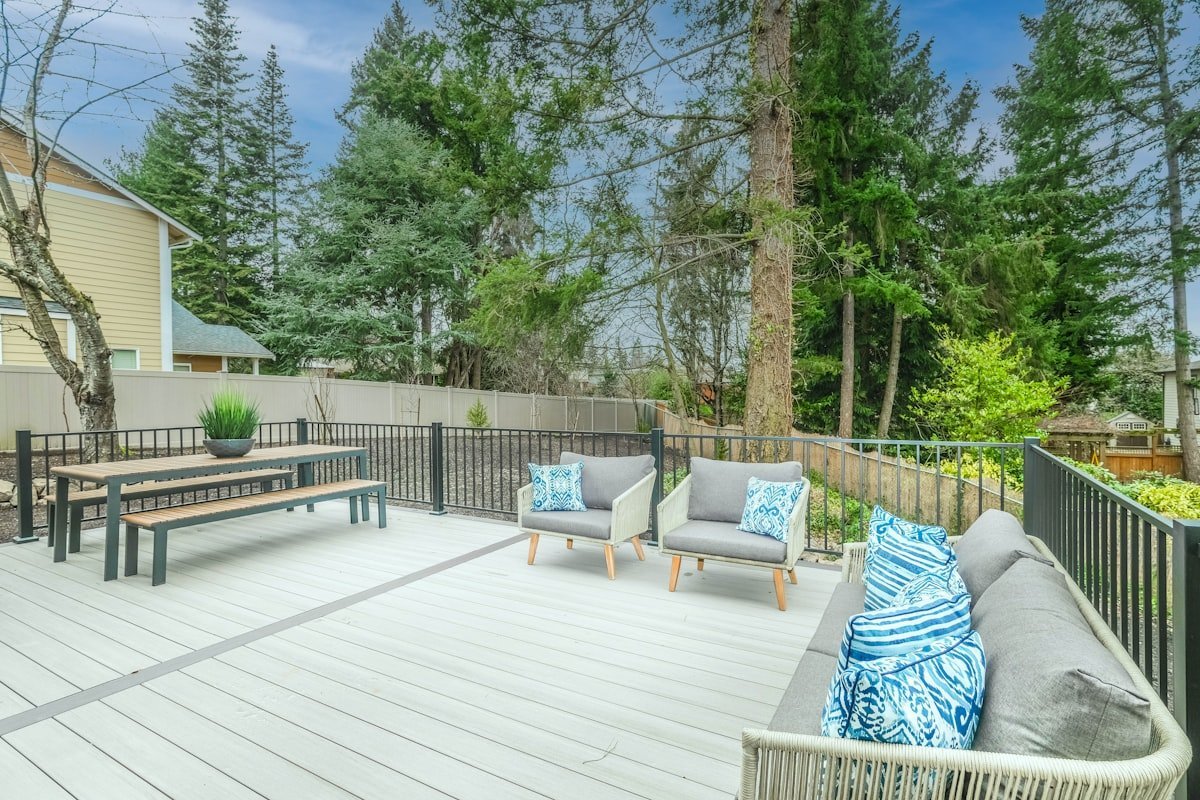
Trex vs. TimberTech AZEK vs. Fiberon: The Real Differences
All three brands make a capped composite board that resists staining, fading, and moisture far better than older uncapped composite. Trex tends to lead on color range and mid-tier pricing, TimberTech AZEK's higher lines lean toward a more realistic wood-grain finish, and Fiberon often lands as the value option among the three certified lines. We'll show you real board samples during your estimate rather than asking you to pick from a website.
Why Composite Wins in Atlanta's Climate
Hot summers, high humidity, heavy spring rain, and the occasional freezing snap all take a toll on wood decking over time. Composite doesn't absorb moisture the way wood does, so it won't cup, twist, or attract the wood-boring insects that show up across North Georgia. It costs more upfront than pressure-treated pine, but most homeowners recoup that difference in skipped resealing and repair costs within the first several years.
Permits Still Apply
Switching from wood to composite decking doesn't change the permitting requirement — it's the structure underneath, not the surface board, that the City of Atlanta, Fulton, Cobb, and DeKalb County are reviewing. We prepare the stamped drawings, file with the correct jurisdiction, and schedule every inspection as part of the build.
Composite Decking Pricing, By the Square Foot
Composite decking installed in Metro Atlanta typically runs $60 to $115 per square foot, versus roughly $35 to $52 per square foot for a comparable pressure-treated wood deck. The spread within that composite range comes down to brand tier (entry-level Fiberon vs. premium TimberTech AZEK), railing material, substructure complexity, and whether the deck is single-level or multi-level. A typical 300-square-foot composite deck lands around $18,000 to $30,000 all-in once framing, footings, and railings are included — we'll give you the exact number in writing after walking your yard, not a per-square-foot guess over the phone.
Composite vs. Wood: The Maintenance Math
Pressure-treated wood costs less to install but needs cleaning and resealing every 12 to 18 months in Atlanta's climate — figure $300 to $600 per resealing on an average-size deck, plus your own time. Composite has a higher upfront cost but essentially no recurring maintenance spend beyond an occasional wash. Most Atlanta homeowners who keep a deck for 10+ years find composite's total cost of ownership comes out close to or ahead of wood once resealing labor and materials are added up, on top of never dealing with splinters, cupping, or rot.
Get a Free Composite Decking Quote
Free, no-obligation on-site estimates anywhere in Metro Atlanta.
📞 Call 404-724-8192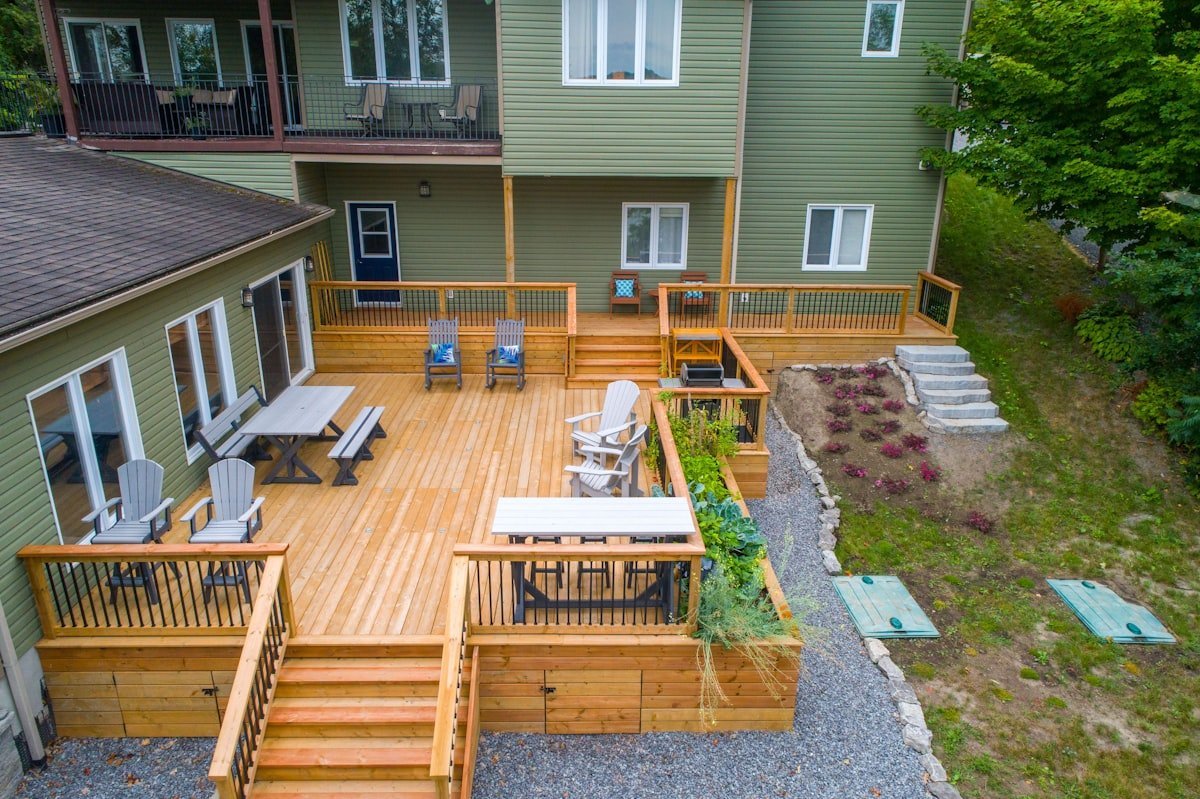
Not sure composite is the right call for your yard? Compare it against our custom wood decks and pool deck & patio pages, or head back to the homepage for the full service list.
Composite Decking FAQs — Atlanta, GA
Composite decking in Metro Atlanta typically runs $60 to $115 per square foot installed, or about $14,000 to $25,000 total for a standard-size deck, depending on size, brand tier, and railing choice. Trex, TimberTech AZEK, and Fiberon all price differently by line, and multi-level or pool-adjacent layouts push the number higher. Every estimate we give is itemized and free.
For most Atlanta homeowners, yes. Composite resists the heat, humidity, and heavy spring rain that cause wood to warp, splinter, and rot, and it won't attract the wood-boring insects common to North Georgia. You pay more upfront but skip the sanding-and-staining cycle almost entirely.
We're certified installers for Trex, TimberTech AZEK, and Fiberon — the three composite lines that hold up best in Georgia's humidity. We'll walk you through capped vs. uncapped boards and which manufacturer's warranty fits your budget.
Yes, hidden fastener systems are standard on our composite builds, along with custom railing options in matching or contrasting composite, aluminum, or cable.
Yes — permitting depends on the material of your decking structure, not the surface material, so a composite deck needs the same building permit as a wood deck in your specific jurisdiction (City of Atlanta, Fulton, Cobb, or DeKalb County). We handle the entire permit and inspection process.
Most composite deck installations in Metro Atlanta take 3 to 7 business days once materials are on-site, similar to a wood build. Multi-level or pool-surround composite decks can run 7 to 10 days.
Far less than wood — an occasional soap-and-water wash to clear pollen and mildew is usually all a capped composite board needs. There's no sanding, staining, or sealing cycle, which is the main reason Atlanta homeowners upgrade from pressure-treated pine.
Capped composite has a protective polymer shell wrapped around a wood-plastic core, which is what actually resists staining, fading, and moisture absorption. Uncapped composite (mostly older or budget lines) can still stain and mildew similarly to wood. All three brands we install — Trex, TimberTech AZEK, and Fiberon — offer capped boards, and we'll steer you away from uncapped options for anything permanent.
Slightly, in the first several months, then they stabilize — this is normal and expected across every major composite brand and is covered in the manufacturer's fade warranty. After that initial settling period, color stays consistent for decades under Georgia's UV exposure far better than a stained wood deck does.
Yes. Trex, TimberTech AZEK, and Fiberon each offer a range of board colors from light coastal tones to dark walnut and charcoal, and we'll bring physical samples to your estimate so you can hold them against your actual siding and trim rather than guessing from a brochure.
Yes — composite performs just as well structurally on a multi-level deck as it does on a single platform, and it's actually a popular choice for stepped, sloped-lot builds common across Metro Atlanta's rolling terrain since there's no extra staining labor added by the additional level.
Trex, TimberTech AZEK, and Fiberon each back their composite boards with residential warranties that typically run 25 to 50 years against staining, fading, and structural defects, depending on the specific product line. We'll walk you through the exact warranty terms for whichever line you choose before you commit.